In the world of ambient lighting and atmospheric design, large candles serve as more than just light sources; they are architectural elements that define the mood of a space. From grand cathedrals to modern minimalist living rooms, the presence of a substantial candle provides a sense of stability and warmth that smaller tea lights simply cannot replicate. Understanding the nuances of their composition and burn rate is essential for anyone looking to integrate these statement pieces into their interior design or commercial displays.
Globally, the demand for high-capacity wax products has seen a resurgence as consumers shift toward "slow living" and mindful home environments. The technical challenge lies in balancing the physical volume of the wax with the capillary action of the wick to ensure a clean, center-focused burn without "tunneling." This intersection of chemistry and artistry is what makes the production of premium large-scale candles a specialized craft within the chemical manufacturing industry.
By exploring the materials, from organic beeswax to refined paraffin, we can uncover how these products offer long-term value in terms of longevity and scent throw. Whether used for spiritual ceremonies, luxury hospitality, or emergency preparedness, large candles bridge the gap between functional utility and aesthetic luxury, providing a reliable glow that lasts for days rather than hours.
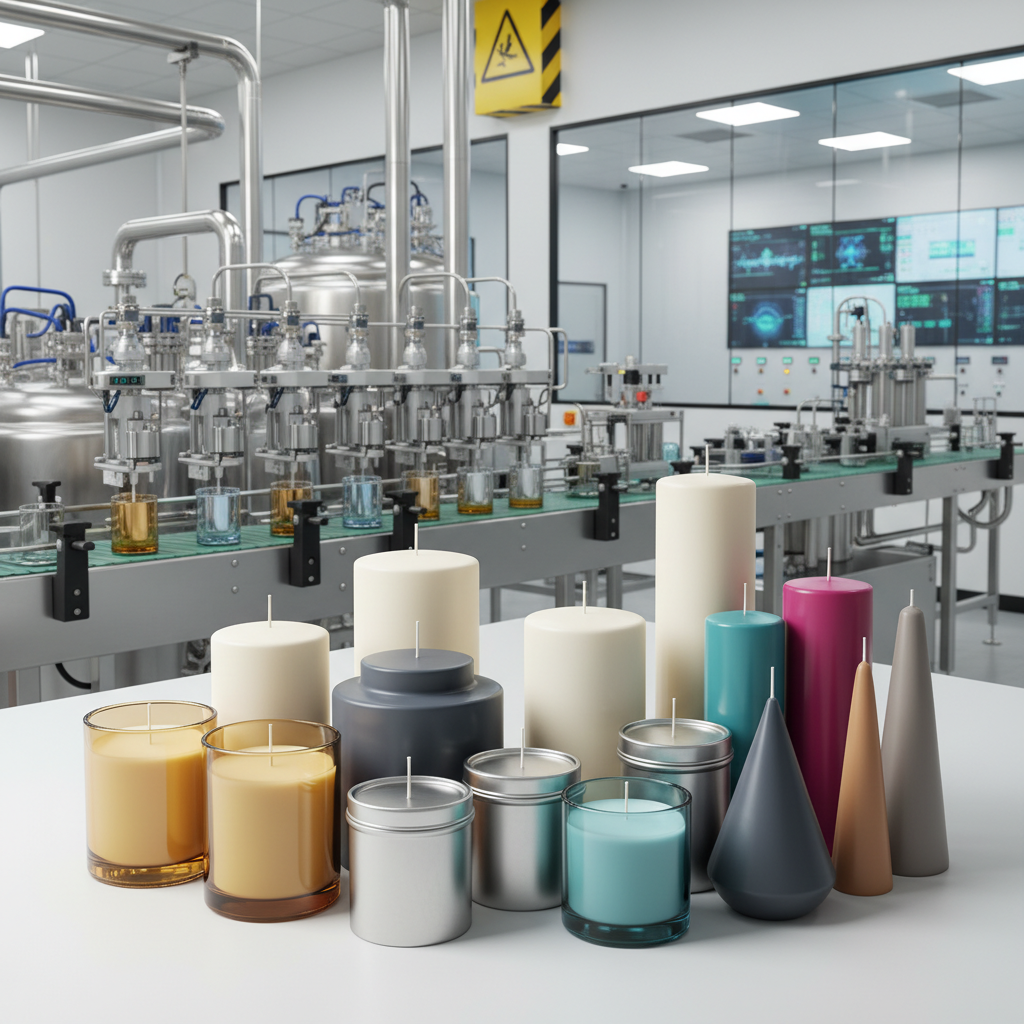
Global Market Relevance of Large Candles
The global market for large candles has evolved significantly, moving from purely religious or utilitarian use to a cornerstone of the luxury home decor industry. According to international trade data, there is a growing preference for pillar and container candles with higher volume, as they reduce the frequency of replacement and provide a more consistent olfactory experience. This shift is particularly evident in North American and European markets where "hygge" and similar wellness trends emphasize the psychological comfort of a steady, warm light.
However, the industry faces a critical challenge: the "burn-off" efficiency. As the diameter of the candle increases, maintaining a heat pool that reaches the edges becomes technically difficult. Manufacturers are now utilizing advanced chemical blends and multi-wick systems to ensure that large candles do not waste expensive wax through tunneling, thereby meeting ISO quality standards for consumer safety and product performance.
Defining the Technical Standards of Large Candles
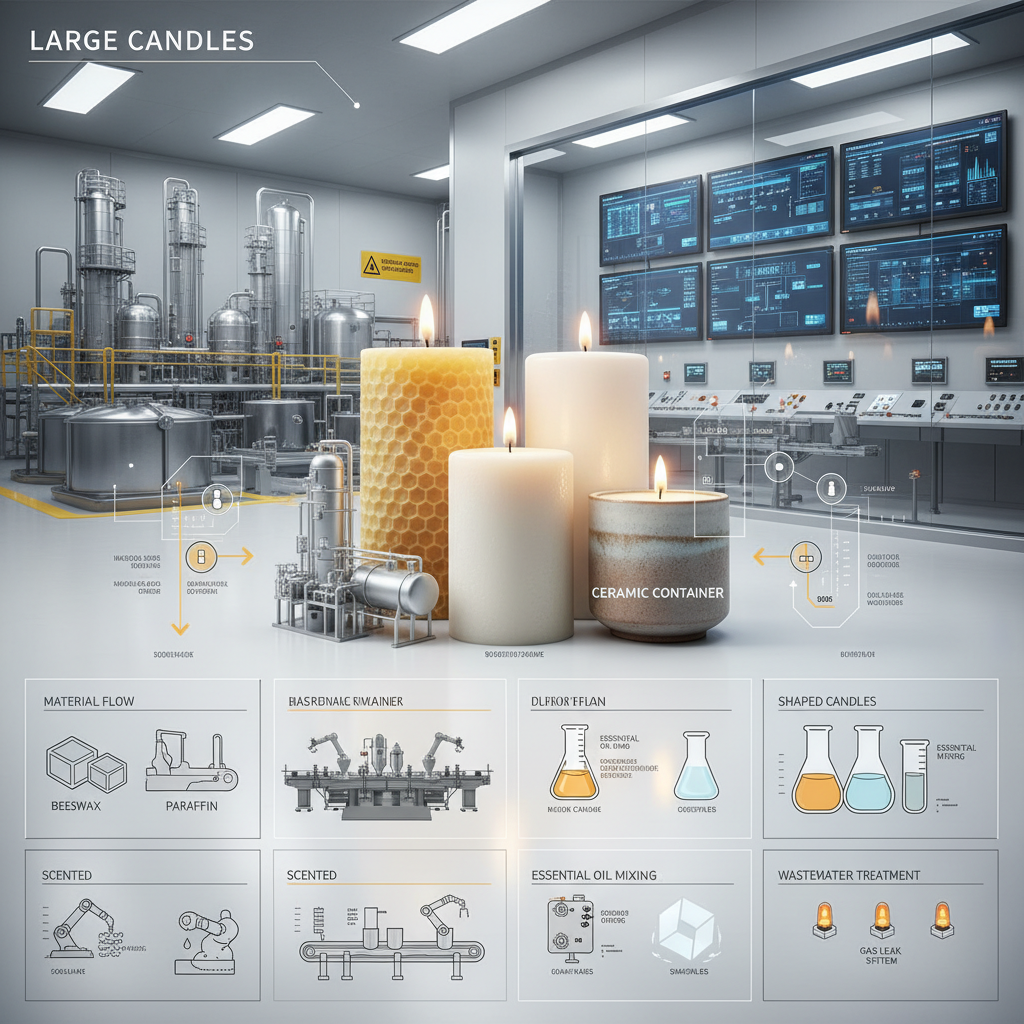
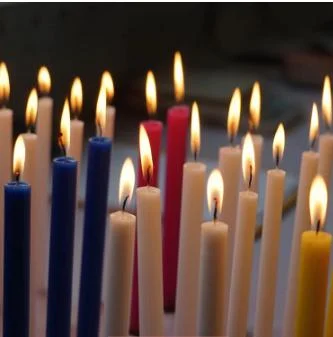
In professional manufacturing terms, large candles are defined not just by their physical height or diameter, but by their total wax mass and intended burn duration. Typically, this category includes heavy pillar candles, oversized ceramic container candles, and ceremonial tapered sticks. The primary goal is to create a product that can maintain a stable flame for 50 to 200+ hours, depending on the material used.
Beyond size, the technical definition involves the "melt pool" dynamics. A high-quality large candle must be engineered so that the heat from the wick liquefies the wax across the entire surface area. If the wax formula is too hard or the wick too thin, the candle will create a deep hole, leaving a significant amount of unused wax around the perimeter, which decreases the product's overall value.
Modern industry standards now integrate humanitarian needs, such as producing long-burning, low-smoke candles for regions with unstable electricity. By optimizing the paraffin-to-stearin ratio, manufacturers can create large candles that provide reliable lighting for extended periods, serving as a critical tool in emergency relief and rural development.
Core Components for Maximum Burn Efficiency
The durability of large candles begins with the selection of the base wax. Beeswax offers the longest burn time and a natural honey scent, while paraffin is prized for its ability to hold intense fragrances. The structural integrity of a large pillar depends on the "hardness" of the wax, which prevents the candle from sagging or leaning under its own weight during warm summer months.
Wick scalability is the second most critical factor. For large diameter candles, a single wick is often insufficient. The industry has shifted toward "triple-wick" or "concentric-wick" designs. This ensures that the thermal energy is distributed evenly, preventing the aforementioned tunneling effect and allowing the scent to be thrown more effectively across a larger room.
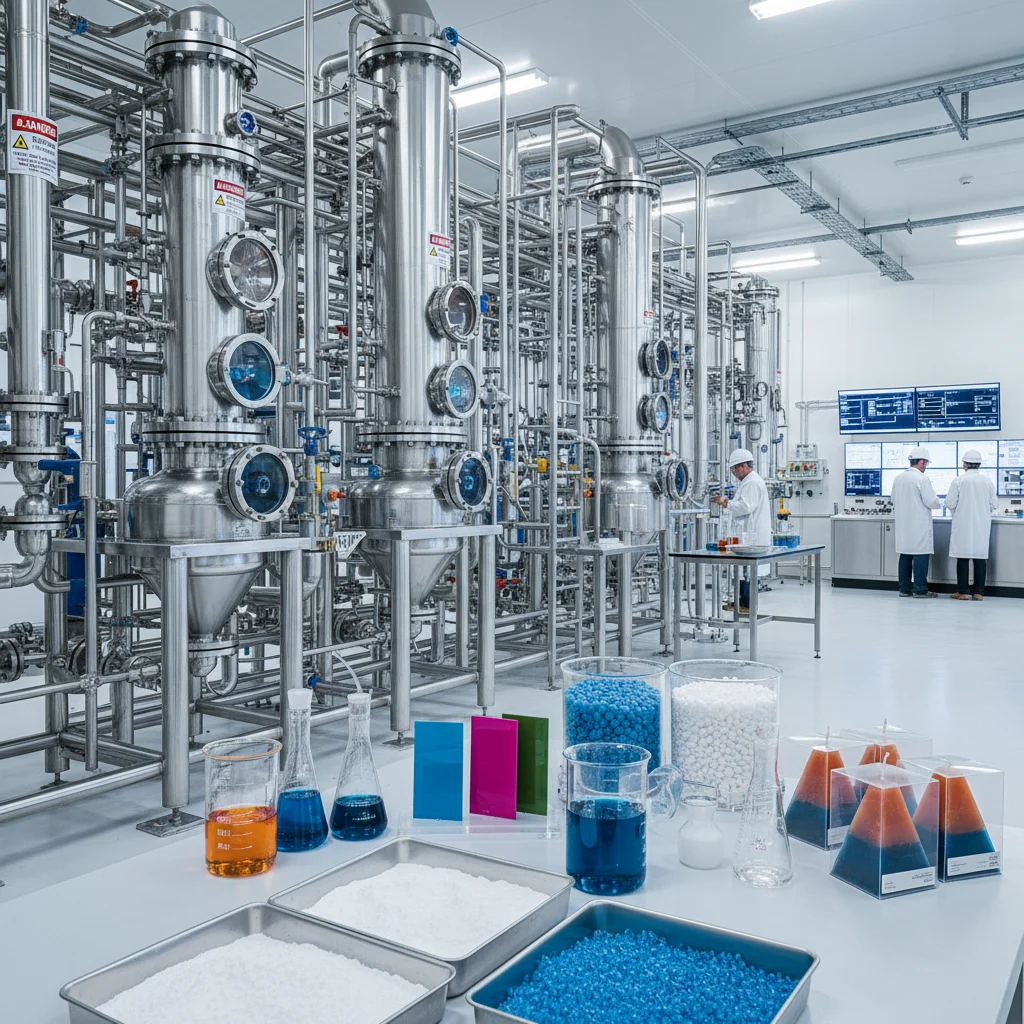
Finally, the additive chemistry plays a silent but vital role. The inclusion of Vybar or stearic acid helps in controlling the burn rate and improving the opacity of the wax. For luxury container candles, the adherence between the wax and the glass or ceramic wall is crucial to prevent "wet spots," ensuring a seamless professional appearance that meets high-end commercial standards.
Comparative Performance of Wax Types
When selecting the ideal material for large candles, manufacturers must weigh the trade-offs between cost, fragrance load, and environmental impact. Paraffin remains the industry standard for affordability and scent throw, but the rise of soy and beeswax has introduced new benchmarks for sustainability and clean-burning properties.
The following data illustrates how different wax formulations perform across key metrics such as longevity, scent distribution, and structural stability, which are essential for maintaining the form of a large-scale candle.
Performance Analysis of Large Candles by Material
Global Applications and Use Cases
The application of large candles varies wildly by region. In Europe, they are staples in religious architecture and winter solstice celebrations, where the sheer volume of the candle symbolizes endurance and light in the darkness. In the hospitality sector, luxury hotels in Asia and the Middle East utilize oversized scented container candles to create a "signature scent" for their lobbies, leveraging the high wax volume to ensure the fragrance lasts for weeks without needing a refill.
Beyond aesthetics, these products serve critical roles in disaster relief. In post-earthquake or hurricane zones where power grids have collapsed, large-format paraffin candles are distributed by NGOs because they provide a reliable, long-term light source for families, reducing the need for frequent redistribution of supplies. This duality—from high-end luxury to survival essential—underscores the versatility of the large-scale candle format.
Long-Term Value and Sustainability
The long-term value of investing in premium large candles lies in their cost-per-hour efficiency. While the initial purchase price is higher than that of smaller tealights, the reduced waste and extended burn time make them more economical over time. Moreover, the psychological impact of a steady, large flame promotes a sense of tranquility and mental well-being, often used in therapeutic settings to induce relaxation.
From a sustainability perspective, the industry is moving toward biodegradable waxes and lead-free cotton wicks. By utilizing soy or beeswax, manufacturers reduce the carbon footprint associated with petroleum-based paraffin. The transition to recyclable ceramic and glass containers further ensures that once the wax of a large candle is spent, the vessel can be repurposed, aligning with the global move toward a circular economy.
Reliability also plays a key role in perceived value. A candle that burns evenly without soot or flickering creates a sense of trust and safety for the user. This emotional connection, combined with the physical beauty of a well-crafted pillar, transforms a simple household item into a piece of functional art that adds lasting value to any interior environment.
Future Innovations in Candle Manufacturing
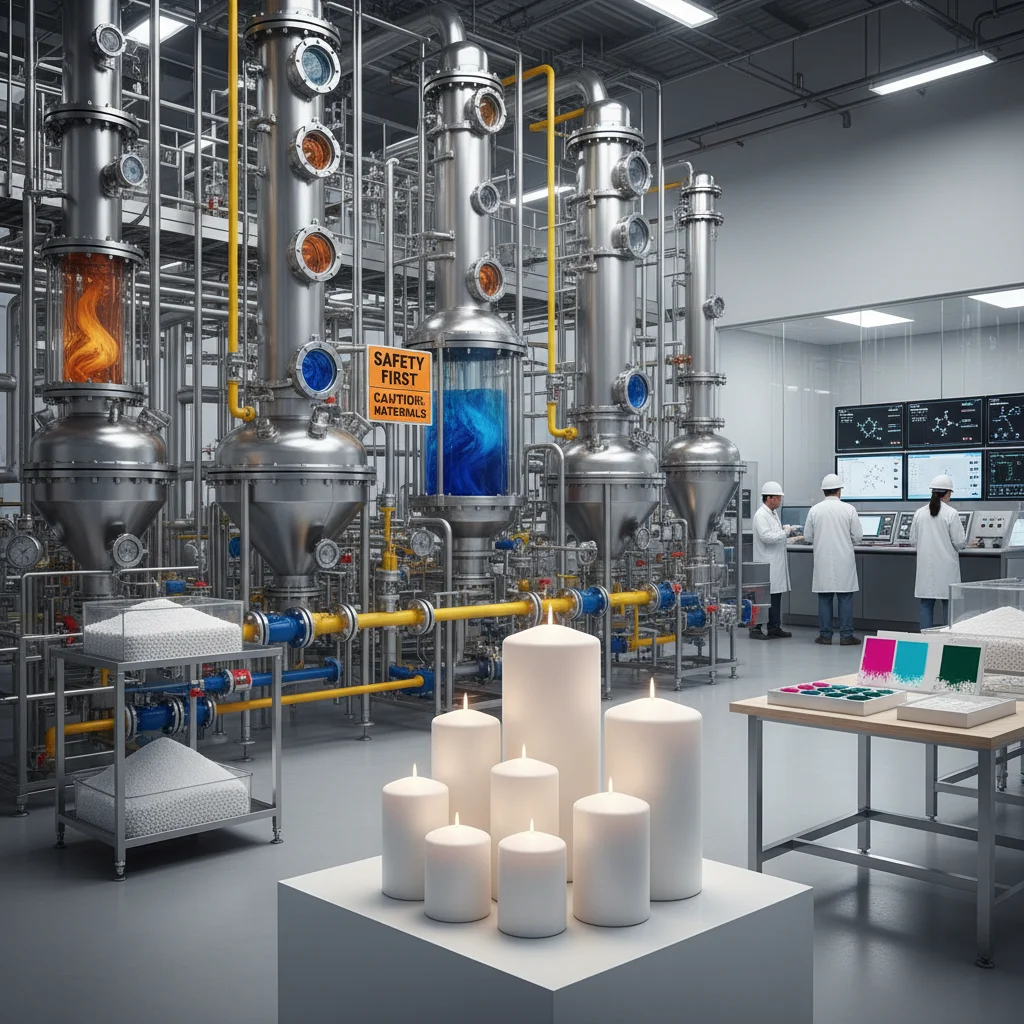
The future of large candles is being shaped by digital transformation and material science. Automation in pouring processes is now allowing for "precision layering," where different scents or colors are placed at specific depths to change the mood of the room as the candle burns down. This creates a dynamic sensory experience that evolves over the life of the product.
We are also seeing the integration of "smart wicks" and oxygen-optimizing wax blends that virtually eliminate soot. These innovations are designed to make large-format candles safer for indoor use in urban apartments where ventilation may be limited, ensuring that the air quality remains high even during long burning sessions.
Sustainability policies are further pushing the industry toward "forest-positive" sourcing for fragrances and carbon-neutral shipping. As we look ahead, the fusion of traditional craftsmanship with green chemistry will ensure that large candles remain a relevant and beloved part of human culture.
Comparative Analysis of Large Candle Manufacturing Trends
| Innovation Dimension |
Traditional Method |
Modern Innovation |
Impact Score (1-10) |
| Wax Sourcing |
Pure Paraffin |
Bio-based Soy/Beeswax |
9 |
| Wick Technology |
Single Cotton Core |
Multi-wick/Zinc Core |
8 |
| Scent Delivery |
Uniform Mixing |
Scent Layering/Zoning |
7 |
| Pouring Process |
Manual Batching |
Automated Precision Pour |
8 |
| Container Material |
Standard Glass |
Recycled Ceramic/Stone |
9 |
| Burn Control |
Natural Evaporation |
Temperature-Controlled Cooling |
7 |
FAQS
Tunneling occurs when the wax melt pool doesn't reach the edges of the candle. This is usually caused by a wick that is too small for the candle's diameter or by extinguishing the candle before the first full layer of wax has melted. To prevent this, always allow a large candle to burn until the wax is liquid from edge to edge during its first use.
For freestanding pillars, a blend of paraffin and stearin or pure beeswax is ideal because they provide the necessary hardness to maintain the candle's shape. Soy wax is often too soft for large pillars unless it is specially formulated with additives to increase its melting point and structural rigidity.
While designed for longevity, no candle should be left unattended. For large candles, the heat buildup in the container or the core can be significant. We recommend trimming the wick to 1/4 inch before every use to prevent the flame from becoming too large, which reduces soot and prevents the glass from overheating.
The "scent throw" is strongest when the wax is fully liquefied. Using a candle warmer can help distribute the fragrance without burning the wick. Additionally, keeping the candle in a draft-free area prevents the flame from flickering, which ensures a steady evaporation of the fragrance oils into the air.
Yes! Once the wax is nearly gone, you can freeze the container to pop out the remaining wax, or use the "boiling water method" to melt and pour out the residue. After a thorough cleaning with soap and water, ceramic or glass containers from large candles make excellent planters, pencil holders, or storage jars.
"Large" refers to the physical volume and burn duration, whereas "scented" refers to the addition of fragrance oils. Many large candles are scented, but some are unscented for use in dining rooms or religious settings where a strong aroma might be distracting. The key difference is that large candles require more complex wick engineering to manage the larger volume of fuel.
Conclusion
In summary, large candles represent a sophisticated blend of chemical engineering and aesthetic design. By optimizing wax selection, wick scalability, and thermal dynamics, manufacturers can provide products that offer not only incredible longevity and atmospheric warmth but also significant economic value. From the luxury of a scented ceramic vessel to the reliability of a heavy paraffin pillar, these products continue to meet a diverse range of global needs.
Looking forward, the shift toward sustainable materials and automated precision will only enhance the quality and eco-friendliness of large-scale candles. Whether you are a commercial buyer or a home decor enthusiast, prioritizing high-burn efficiency and non-toxic materials will ensure a safer, more rewarding experience. For premium solutions in large-scale candle manufacturing, visit our website: www.seawellcandle.com.